Friday, August 20, 2021

So...NitroPlus Blasterz Huh?

This post was initially made for the Kumite Discord server.

That's right, Nitroplus Blasterz. Or I guess more accurately: Nitroplus Blasterz: Heroines Infinite Duel. But let's just go with NPB or if you're feeling frisky: N+B. We love to encourage creativity here on the internet so go with whatever shorthand makes you comfortable, after all this is, inexplicably one of the most creatively-designed fighting games on the market. That's not a joke. Somehow this fighting game is genuinely unique among it's contemporary releases. But enough about that, let's get to the real question you're probably having right now.

What the fuck is Nitroplus Blasters?

Well first off, it's Blasterz with a Z you uncultured swine. More to the point, Nitroplus Blasterz is an all-star fighting game that brings in characters from a number of titles published by Nitroplus, who are best known for publishing visual novels with their most notable property at the time of writing being the Fate/Zero franchise in collaboration with Type Moon. Or, if you're a filthy degenerate like me, you had a different question upon first seeing this game.
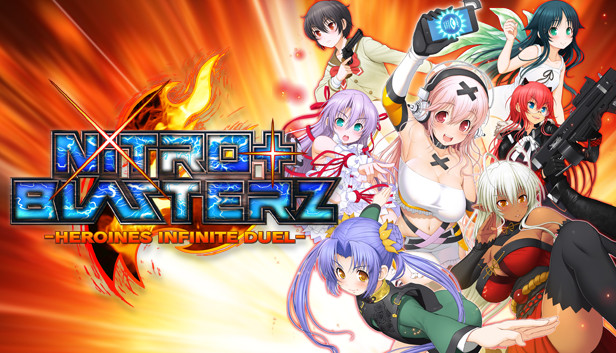
N+B's banner art on Steam. Yes this game is on Steam.

Wait is that Sonico?

Yes, yes it is. The other most notable property in the Nitroplus (n+) umbrella is the mascot of their annual music festivals Sonicomi, or Sonico. If you're familiar with her that actually gives you an okay idea as to what kind of content n+ is most known for. Namely a strange amalgamation of humor, romance, comedy, horror, and eroge. Okay so the horror part doesn't really apply to Sonico herself (unless you think about it long enough) but I'll get to the roster breakdown later. For now: yes this game features Sonico as both a playable fighter as well as an assist.

Mechanics

Assists

You might have noticed that I mentioned assists just there. That's because N+B has an assist system. When picking your character, you also select two assists that can be deployed during the fight. There are 20 of these assist characters, and the game will offer a recommendation of which ones generally work best alongside your selected fighter by putting a little star next to them. The effects of these assist characters can vary significantly, from Sonico's band throwing out random buffs that either fighter can pick up, to a robot girl from a game I've never played launching into the air and calling down an air strike. Generally, the greater impact an assist can have, the less you'll be able to use it. Both assists start a round locked behind a timer, and won't be available until a certain amount of time has passed from the start of the round, big, damage-dealing, combo-starting/extending assists will usually take longer to unlock than assists that just do a single hit, or act merely as an anti-air. Mixing and matching your assists with your selected character can open up a surprising amount of depth to the different combinations you can create, and therefore, a potentially limitless amount of custom combos you can pull off, especially when you're more familiar with the games other systems.

Buttons

Right but I've gotten ahead of myself haven't I? You can't do any of those things if you don't know what buttons to hit. Well, actually you probably can do some of those things by mashing all the buttons as fast as possible, but usually your opponent will be able to punish you if you do that. And not the fun kind of punishment that you might be thinking of if you clicked on this page because you saw Sonico. N+B is a 5-button fighter, meaning you have 5 different buttons that do different things. If that sounds like a lot, or you just want to continue the theme of putting a Plus into your notation, you can think of it as a 3+2 button fighter, as there are three primary attack buttons and two more specialized buttons. These buttons are A, B, C, D, and E. If you know you're ABC's you're already off to a good start!

A, B, C

So the first three buttons are pretty straightforward. They are Light (A), Medium (B), and Heavy (C) attack buttons. So yeah, nothing too crazy so far; the vast majority of special moves in the game are performed via a motion input (think a quarter circle forward) and then hitting one of these three buttons. For the most part, each button will correlate to a different version of the same attack. Usually the heavier forms of a move will just be a slower, more damaging version of the same attack you'd get by hitting A, but sometimes it will change the angle of attack, allowing you to hit higher or lower than the A-button version of the move. If that sounds a little overwhelming don't worry, you can figure it out pretty quickly by trial and error, and there is a whole training mode and all that stuff.

Beyond the basic attack aspects of these buttons, hitting B+C at the same time performs a grab. This is a universal command for all characters and it behaves pretty similarly to how most fighting game grabs do. Similarly, hitting B+C while being grabbed will break your opponent's grab. There's couple of scenarios in which you won't be able to break a grab. The first is if it's a counter grab, meaning the grab interrupted the startup of a different attack. The other involves a mechanic called Vanish, that I'll explain more on in a bit.

Finally, hitting A+B+C at the same time can also activate your Infinite Blast. If you've played any of the Guilty Gear games this will seem familiar. Infinite Blast can be performed once per round. It's effects will change slightly based on what you were doing when you activate it, but the general gist is that it creates an invulnerable burst around you, which can knock back an opponent, and then buffs your attack speed and damage, as well as steadily filling up both your health bar and your charge meter. I'll go into more detail with Infinite Blast in a bit once I've familiarized you with some of the other important details, but for now I'll just say that it acts as sort of a combination of Roman Cancelling and Bursts (from Guilty Gear) as well as Max Mode (from King of Fighters XIV).

The one last note I have about these three basic buttons is that they're the ones you use for supers. Every character will have a few unique supers that take up one level of meter. These will always be done by performing an input and then hitting A+B at once. On top of that, everyone has access to a 3-level super called a Lethal Blaze, which are always done with the input of two quarter circles forward and B+C at the same time. In numpad notation, this would read as 236236 B+C.
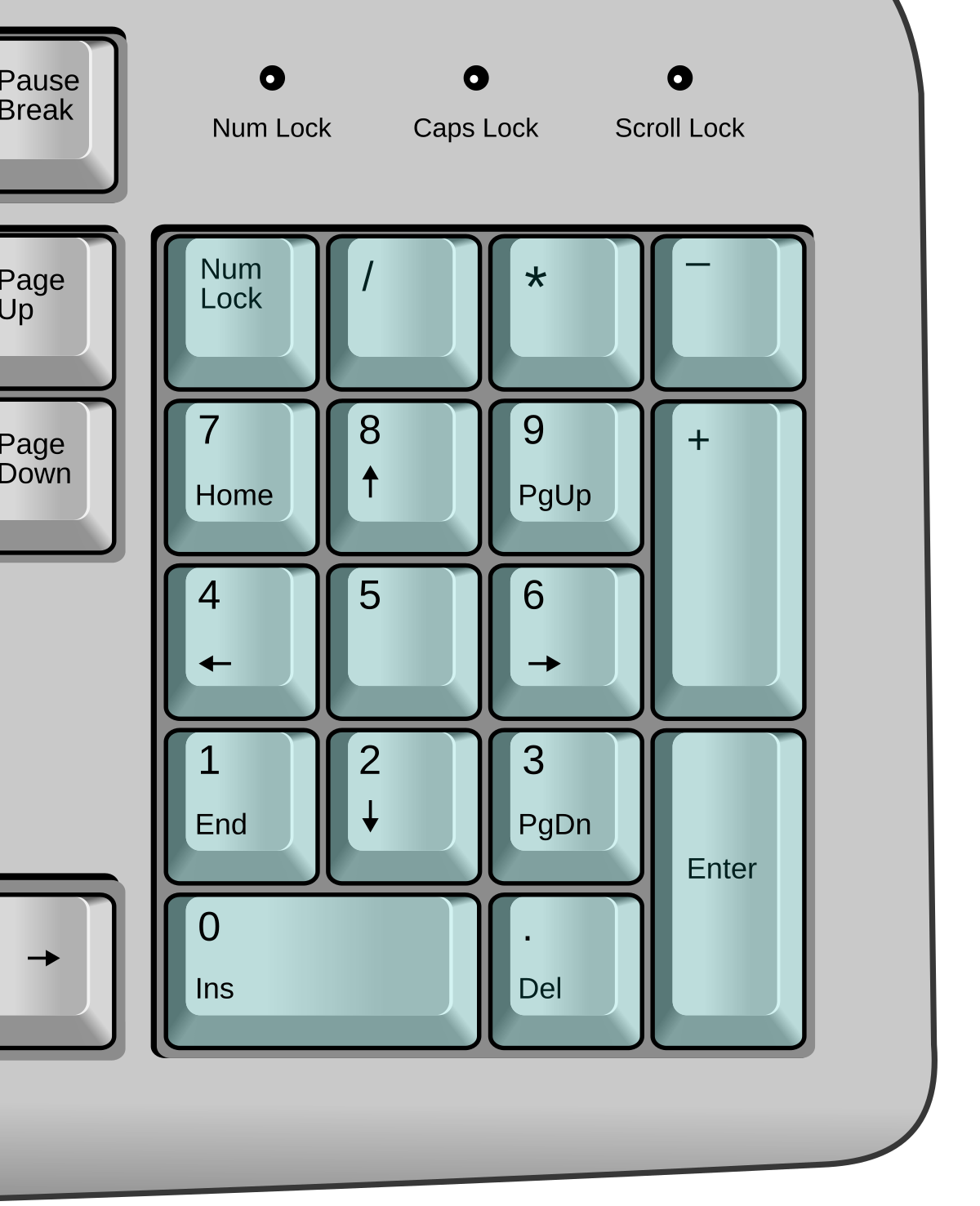
Numpad notation refers to the numpad on a keyboard, where the arrows you can see on the numpad correlate to directional inputs on a joystick. So 2 would mean Down, 6 would mean Forward, 4 would mean Back, and 8 would mean Up, with the diagonals being referred to as 1, 3, 7, and 9 respectively. 

E

You may have noticed I skipped D, don't worry, I'll give that later. Wink. No, but actually D is used for a lot more things than E is and I'm going to try to collect all the most complex mechanics in one spot. So instead let's talk about E! As a trans girl I love E! If you don't know why I said that, don't worry about it. Instead, just know that E in N+B is basically this games equivalent of the Dust button from Guilty Gear, and much like Dust in those games...it's on E? Okay so maybe the lettering isn't a helpful way to remember this, but it's fine. E is a universally similar button across characters. It has a standing version, a crouching low version, and an air-based version. Standing, or Neutral E (5E, if you prefer) is a universal guard break attack. You can charge it and it's quite unsafe in general but unless the opponent is using that Vanish mechanic I alluded to, it will break guard and if they're not guarding it deals a hefty amount of damage and will often let you start a combo.

Crouching E (2E) is a universal sweep. This is just straight up the same thing that crouching dust does in Guilty Gear. Similarly, the two types of E attacks can help mix-up your rhythm during a pressure string, and hopefully catch an opponent off-guard. Jumping E is actually just another air attack. This attack is different between characters and really doesn't have many unique properties other than that it's usually (though not always) slower than the other air attacks but with a larger hitbox.

E can also be used for a sort of counter attack special. If you've played SFV you may find it similar to spending a bar of your V-Trigger to get out of blocking. In N+B these are called Counter Raids, and by spending one bar of meter, you can hit forward and E (6E) while blocking to launch into an invincible guard cancel attack. These are unique to each character, meaning some characters Counter Raids are a lot safer than others. If your opponent has read your intentions, they can bait out a Counter Raid, which can put some characters in a real pickle.

Okay so you know how I said E wasn't used for any more elaborate things? That was a lie. I deceived you. I am a master of manipulation and espionage. E is also used for a mechanic called Variable Rush, which used up two meters and essentially launches into a custom combo state. The move that initiates Variable Rush is invulnerable, and usually lets you fly across the screen, which is pretty baller. After hitting, hitting A, B, and C will allow for follow up attacks. During the follow up attacks, you can't be hurt by an opponent's assists, which can make it very helpful against utility or zoning assists. Your opponent can still hit you in this state though, so don't just drop your combo because then you'll have spent two meters to get hit by an anime girl. Which isn't as fun as it may sound. That really is the most complicated use of the E button though, so it's still a lot simpler than The D, which as I said, comes later.

D

Okay, now is later enough. D is really important button in N+B because it's used for a number of different techniques that server different purposes. Unlike the other four buttons, which are almost exclusively used for offense, D stands for Defense. And uh, Assist. And Vanish. And Evade. And hmm...Maybe D doesn't stand for anything. Regardless, this is basically the button upon which the games most unique functions are performed. So instead of going into full detail on every single one of these I'm gonna just list the most straightforward ones here, and then cover the more involved concepts as their own sections in a bit.

So, apart from all the wacky stuff, D is used for Vanishing Guard and Evasive Action. Evasive actions are essentially just a sort of Dodge. Oh maybe D stands for Dodge? We'll workshop it. Hitting Forward D (6D) rolls you towards your opponent, Down and D (2D) usually performs a little hop in place, and jumping D (j.D) will usually do a sort of moving dodge in the air based on the direction you're moving in. If you've ever dodge in Smash Bros. that's probably the closest analogue. These Evasive Actions are immune to projectiles for at least part of their animation, though the exact amount of distance covered and time spent in an invulnerable state vary from character to character. It would be bad, for instance, if a grappler had the means to just cross the screen while being immune to any zoning options.

O-oh, or not, my apologies sir...

 Evasive action can also be used to cancel out of a throw attempt if you whiff a grab. Grabs in N+B are generally harder to pull on than in a lot of other games, as they have a long-ish whiff recovery and a large window in which to break the throw. As such things like Evasive Action, Partner Blitzes, and Variable Rush can be used to cancel a throw attempt in order to balance things out.

Partner Blitzes are the most aggressive use of the D button. By hitting A+D or B+D you can call in an assist. As noted, you can cancel into Partner Blitzes from a fair number of animations, which can allow you use them as a get-out-of-punishment-free card if you whiffed something dangerous, but also means you can accidentally drop your own combo by cancelling an attack into a Partner Blitz at the wrong moment. You can also cancel a Partner Blitz with another Partner Blitz to get both your assists in play at the same time. This can be helpful for a few different things, most obviously the ability to just take up most of the screen with attacks, and force your opponent to be on the defensive, letting you go into your set-play if you have any. Another reason you might do this is just because you like Faust in Guilty Gear, or play Smash with the items on. Which is all to say, you love chaos.


Vanishing Guard is N+B 's equivalent of Faultless Defense from Guilty Gear. By holding back and D (1D/4D/7D), a shield goes around your character. When blocking an attack via Vanishing Guard, a number of things happen. First off, all affected attacks do less chip damage, and adding to hitstop of the attack, giving both players a couple extra frames to think about what they'll do next. During this hitstop, both characters can cancel into anything besides walking, air-dashing, or re-using an aerial attack that they've already done before landing (that last one is really specific and is essentially to prevent you from jabbing a Vanishing Guard and then cancelling the hit stop into another air jab, since air jabs are fast little moves). Vanishing Guard can be done in the air, or during block-stun, and can be used to negate a potential cross-up, which makes it really strong. Of course you're probably wondering why on earth you wouldn't always be using this, and there's two main reasons. The first is that even though the defender usually gains a slight frame advantage coming out of hitstop, they're not inherently going to be able to turn this defense into offense, and if the attacker has planned for this, they can end up resetting their pressure. The second, and simpler reason, is that if you get grabbed while in Vanishing Guard, you can't break the throw. As mentioned earlier, throws in this game are fairly slow, that's because the majority of characters can use throws to start combos, meaning that if you're too obvious with your application of Vanishing Guard, your opponent can just walk over to you, wrap you tightly in their arms, look deep in your eyes, and body the ever-loving fuck out of you.

Recovery, Counter, and Other Funny Little Numbers!

So I forgot to put this earlier, and it's entirely possible you already figured this out if you've already tried out the game, but hitting any of A/B/C/E lets you tech or recover after being hit by a move. Holding Forward (6) or Back (4) lets you recover in either direction, and these recoveries can be done both in the air and on the ground. Holding down these buttons will let you initiate recovery at the first possible moment in an opponent's combo, meaning it offers some measure of protection against frame traps. With that said, sometimes an opponent will try to bait your recovery, and hit you the moment after you recover but before you can block again, thereby starting up a new combo. This little interplay can add to the vast chess game that is...an eroge visual novel fighting game.

Counter hits are basically the exact thing you might imagine they are, if you hit an opponent during the animation of one of their attacks, the game makes a distinct noise to signify you've landed a counter. It's not quite Guilty Gear Strive levels of communication; the game doesn't put COUNTER in giant letters and there is no booming voiced man yelling at you, but it's still pretty hard to miss. Counters do added damage and hitstop, and usually will stun the opponent for longer than they normally would, allowing you to launch into your own offense. However: standing and crouching light attack (5A/2A) cannot counter hit! 

Now let's talk about health! Hello nurse! I'm not actually going to explain how a health bar works here. There's two explanations that I can give, one of which is so simple that it may come off as insulting, and the other being so complicated that I don't think it'd be of much help. With that said, Let's talk about GUTS! 

DO YA HAVE IT?

Uh, no not that one. Put simply, the Guts mechanic in N+P means that the lower health you're at, the less damage you'll take. Damage scales down alongside health meaning your health bar drains slower the emptier it is. This is actually a really common thing in fighting games but is usually more of an under-the-hood type thing. But this is why, if you see the game on "Will It Kill?" or something like that, sometimes It Will Not Kill. The full chart with percentages can be found on the Mizuumi Wiki, so I'm just going to link to it and not reveal how badly I did in high school math.
Haha numbers!

Finally, each type of attack in the game in generally categorized into four levels based on their speed and damage. The general rule of thumb when performing a combo is that any attack can cancel into a higher level attack, meaning you could cancel a standing light attack (Level 1) into a crouching B attack (Level 2) into a C attack (Level 3) and then into a special (Level 4). These levels are also defined by their recovery time after the attack, as well as how long of a blockstun they put an opponent in. Please note that you cannot cancel from a Level 2 into a Level 1, or descend levels if you're hoping to cancel, but if you manage to finagle things just so, you hit a Level 1 attack after a higher level one if your opponent isn't able to defend themselves adequately, thereby letting you reset your combo. I'm going to post the frame values for these Levels, as sourced from the Mizuumi Wiki, but do note there are a couple of exceptions, as some moves launch or wall-bounce, which would alter the whole nature of what kind of cancels you'd be trying to pull off.

The easiest way to think of this is that a combo just slowly escalates from lighter to heavier moves.


Okay so, do you remember how I said I'd talk about the complicated stuff soon? That was all a trick, a bamboozlement, a hoodwink if you will. Those last two sections WERE the complicated stuff. You now know literally all the mechanical stuff of this game. So now you get the pleasant surprise of a roster breakdown. Which is to say: I finally get to do my favorite part where I put up pictures of anime girls and tell you what they do. But before that I'm also going to embed a video tutorial here, also courtesy of the Mizuumi Wiki. It should probably be clear that this wiki is an invaluable source of info, especially on niche games, and if you want to go even further in depth on frame data, individual match-ups and assists, I highly recommend looking there.


THE ROSTER

Choose your fighter! Or your uh, Infinite Heroine?

Choose your homies wisely...


Okay, so for this post, I'm also going to give a little backstory on the characters, or at least tell you what game they're from, since I haven't played most of them.

Sonico

Hey there she is! Sonico herself! Wowie! She's the closest thing the game has to a protagonist. Which is to say she's actually closer to just the character that connects the other ones. Or something? It's not really important, this is a fighting game plot and even among fighting game plots it's not very easy to follow. It's not like, Blazblue or Guilty Gear but it's more convoluted the King of Fighters' NESTS arc. She's one of the most recognizable characters in the game thanks to breasting boobily to great acclaim. In this game, she's a puppet fighter, making her actually really complicated. Her attacks consist of her cats attacking on her behalf. With each button correlating to a different cat. Holding down buttons therefore can make cats move around and attack upon release. Her specials involve her friends showing up to either kick her opponent or hit them with drumsticks. Her Lethal Blaze is a cut-in of her doing a little photoshoot which leaves her opponent unable to block for a brief period of time. Because of Sonico's long range on both her specials and normals, a lot of her game is built around keeping distance from her opponent and then using her supers and specials to attack from afar. As such, her best assists are usually ones that occupy a large area of the screen, either creating an impassible obstacle, or setting up a high-low mix up with her many, many cats. She also has an alternate costume where she's in her underwear because...well I mean, you know why.

Ouka

Listen I'll be real with y'all I do not like lolis and I'm unsettled by people who are really into lolis. Ouka used to be the mascot for nitro+ before Sonico rose to fame, and as such she is now livid at all these other girls stealing her limelight. She is out for BLOOD and she has a PANDA and a giant cross with rocket boosters attached to it. Which, honestly? Valid. She also shoots rockets, a shield she can create, a giant ball-on chain thing that she swings around, and the ability to fly around thanks to aforementioned rocket boosters. She's kind of like a mech, although there are other girls that are more like a mecha, and assists that use literal mechs, so maybe that's the wrong comparison. She's actually the largest character in the game thanks to her giant cross mech thing she's got going on. Since she flies around, she can do a lot of aerial combos, and her best assists will usually be ones that help initiate this by launching opponents or keeping a comfortable distance when grounded.

Anna

Boi-oi-oi-oing! Anna is from a VN called Gekkou no Carnevale, and she's like an automata puppet thing that works for a circus? Or uh, something? Anyway, she's primarily a zoner, as her C moves generally involve just shooting a ton of little spikes at her opponent, a lot of her specials also focus on this. She also has a hover dash, so if you like playing I-no in Guilty Gear, well this girl also does that but has projectiles, lots and lots of them. She's not useless in close range either, with competent high-low mixups and a special counter move that creates huge separation between her and her opponent allowing her to return to her funny zoning techniques. As such her best assists will usually either help her create space, help her engage the aforementioned high-low mix up, or help string together moves in the air.

Ethica

From what I understand, Ethica appeared in this game before her own game actually debuted. As for her own game, it's called Tokyo Necro and Ethica likes to research on corpses. She's also gay, so good for her. Beyond that, she's this game's resident grappler. All her specials are either grapples or moves that combo directly into grapples. Her supers actually all chain together, with her Lethal Blaze only costing one bar of meter with the caveat that it can only performed after hitting both of her other supers as one long chain. As such, using a super with anything less than 3 full meters to work isn't gonna be worth it for her. Well, she does also have a different, one bar super command grab that you can use but like, you're not gonna impress the chicks if you aren't chaining three super grabs right? Anyway she wants to close gaps, so moves that force an opponent to stay blocking, or knock them towards her are good, as are assists that generate meter for her.

Mora

Mora is a dhampir with a hammer. She's from uh Vampirdzhija Vjedogonia, which I guess is a vampire thing. Did I mention she has a hammer, because she has a hammer. The hammer means she can deal a lot of damage very fast, but also because it's a really big hammer she can't like, throw it or anything, she just hits you with it has moves that help her get into hammering position. These moves include both high-low mixups and cross-ups and she do a lot of damage after just one slipup by her opponent. She's somehow an even more extreme specialization than Ethica, as Mora really doesn't have a lot she can do from range, and her best assists will focus on allowing her to get in on her opponent, or if you're feeling creative, offering some form of long-range attack to balance her moveset.

Saya

Saya is from Saya no Uta (Saya's Song is what I think that translates to?). Spoilers for that game here: she's a meat...thing? She utilizes set play by way of placing little meat-mines on the field that can control a large amount of the stage if she gets time to set it all up. She also has a stance in which she can throw out a meat tendril to either grab an opponent in front of her from mid-range OR an anti-air grab. Beyond that she has some very large buttons that can do some nasty stuff once she puts you in the meat-mine-hell-zone. Her assists similar would emphasize either getting her away from her opponent or keeping them in a ceaseless, meat-based juggle.

Ein

Gun girl! Gun girl! We got ourselves a gun girl. I know one of my friends was upset that the gun girl they wanted in this game wasn't in it, instead we have Ein. Ein is from PHANTOM OF INFERNO and she's an assassin and in case you couldn't tell from my yelling, she has a gun. She's focused on speed, with high speed normals and projectiles, with the obvious weakness being health. It's genuinely possible for Ein to die from one really good combo by the opponent, and as such you need to be careful with spending your defensive resources. Assists that can help her escape a dangerous spot, reinitiate a combo, or just buff her health can all be useful for Ein. I should also note that her Lethal Blaze is rad as a hell, as she leaps off the screen and you manually aim a sniper rifle at your opponent and try to hit them.

Al-Azif 

Not to be confused with Al-Azif Mortis, the boss of the arcade mode, Al-Azif is actually the protagonist maybe? I think? She's from Demonbane, which is a game I know nothing about, and she is a physical manifestation of the necronomicon. The second story of N+B begins with a detective noir set in Arkham City, Al-Azif's home. I think also that makes her almost this games shoto. Not really but almost. She has a pretty diverse kit, with good projectiles and a re-stand in wakeup and a strong command grab. She lacks a standing overhead which weakens her mix-up game though, and her projectiles have a long recovery. Having assists to make her projectiles safer or to provide her with an actual overhead option both help a lot.

Ruili

Ruili is from Kikokugai: The Cyber Slayer. I don't know what that means. Apparently she is a gynoid that involves fusing someone's soul into a cybernetic uh, thing? She has a brother in her mind or something, so if you are a fan of Lejos and Selka, maybe this is good? Anyway, she is the Kenpo practitioner and fights along the lines of Jam, Xiangfei, and just any fighting game franchise's Chinese character. Similarly she's a close range monster with a ton of frame traps and moves to close gaps. She has no projectiles so that's obviously one of the things you may want to address with assists. She has a move that allows her to pass through a projectile, which helps her against characters like Saya. She also has a lot of health, to help her if she gets trapped in zoning hell. Still, assists that put her closer to her opponents help her out a lot.

Muramasa

Okay so you know how I mentioned that other girls were more of a mech than Ouka? I meant Muramasa who is a Demon Spider Mech Weapon Thing from Full Metal Daemon Muramasa. However, her moveset focuses more on the spider part, as she has a number of web-based attacks that allow her to fly around like Spiderman, pull opponents towards her, and trap opponents with a trap set on the ground. She also has a rushdown rekka move and a super in which she turns into a mechanical spider and heals herself. She hits hard and moves around like crazy with the ability to be effective at both close and long range. Her biggest missing trait is that she has no reversal moves without spending meter, as such maybe you can guess what kind of an assist would be helpful for her. She's also not a very straightforward character and as such can take a bit of work to learn. The benefit is that your opponent may have issues if they aren't familiar with her. If you played Hazama in Blazeblue that probably helps give you some idea of what you can do with her kit as it definitely overlaps with his.

Saber

Yeah, it's Saber, from Fate! Saber has a sword, as you would imagine, meaning she is effective from close-mid range. Her sword can be either invisible or visible which gets toggled by some of her supers and other moves. When the sword is visible, her moves do reduced chip damage. When it's invisible, it chips as normal without any modifiers to her damage output. While she has good range on her moves, she doesn't have any real ranged moves, so that's usually what you'll want from her assists. She's one of the easiest characters to pick up if you're coming from other games but still rewards you at higher-levels of play. Also she's from Fate so she's probably one of the first characters people will pick up, so that works out pretty well.

Ignis

Ignis is from Jingai Makyou which I don't know much about. She's I guess some sort of mystical protector of earth from ancient times. So you know, good for her! She's a tricky fighter who can lay traps on the stage from range (including a super that lays a trap for a big exciting cut-in if they step on it. While her most elaborate and intriguing gameplay is from range, she has a command grab and can still function close-up. Like Muramasa, she lacks a meterless reversal move with invincibility, so you once again want to use assists to compensate for that unless you just really want to burn a lot of meter on reversal supers. She also has a move where she throws a lighter that then explodes, which is just cool. 

Homura

Homura is one of the game's two guest characters. She represents the Senran Kagura franchise from XSEED and Marvelous, who are coincidentally part of the publishing group for this game. She's also gay but her girlfriend isn't in this game, so she's gotta hustle to get back! Her playstyle actually incorporates the Aerial Rave mechanic from the Senran Kagura games. She has really strong normals, some of which can chain into a mashing aerial combo for good damage. She also can fly around like Choi Bouge from King of Fighters. She's built all around this mechanic, without a ton of specials, she mostly just has tools to help her initiate combos, including a cross-up special. Also, and I cannot stress this enough, hehe gay. She can work well with most assists, but may want a projectile to help round out her kit.

Heart Aino

The other guest character is Heart Aino from Arcana Hearts, although you're more likely to recognize her from Blazblue Cross Tag. She's actually the most prototypical shoto character in the game, a kit very similar to Ryu from Streets. She's a little more elaborate with the different forms her attacks can take based on what buttons you hit. As such, she's even easier to pick up than Saber, especially since her moveset isn't very different in this game from any of her other appearances. Still, despite her well-rounded kit, she's meant to be a rushdown character, with her projectiles having a long recovery and being equipped with quite a few moves to close the distance between her and her opponent. Assists that close gaps or help her launch opponents for aerial combos are probably her best bet, though she's fairly versatile and can probably make use of most assists.

Assists

Okay so there are 20 assists and I've been writing for most of the day, so for now I will link to the Mizuumi Wiki again, as they do have pages for each of the assists explaining what they do. 

Conclusion

Hopefully some of these many words helped convince you to give this game a try. It's on Steam and presumably on other online storefronts. The netcode genuinely isn't the best and I think you're better off using a program like Parsec (or whatever screenshare program is in vogue when you're reading this) to play with friends. Or maybe the netcode will work for you! That would be cool, if it does, play with me by joining the Kumite discord server! Thanks a bunch for reading this and I hope it was helpful for you!

Friday, August 13, 2021

So, you wanna learn The Last Blade 2

This guide was initially written for the Kumite Community discord.

So if you're reading this I'm already assuming that yes, you DO want to play The Last Blade 2 video game, possibly with your friends, or even your family if your family is cooler than mine. I should put the disclaimer that I am by no means a comprehensive resource on this game, or any other game for that matter, as I am-quite frankly-not particularly good at this game. With that said, if you've just decided to look into this game, or have played it a little but had trouble understanding certain aspects of the gameplay, this post should hopefully help you out. The goal of this guide is give you some background on the game, its mechanics, and its characters, and hopefully make it a little easier to get started. So with that all taken care of, it's time to get on with the useful information! If you're still reading this paragraph and haven't already skimmed down to find the info you were looking for, hi, thanks for the attention!


What is The Last Blade 2?

Last Blade 2 is a fighting game developed by SNK, who you would probably know better as the developer of King of Fighters, Fatal Fury, Samurai Shodown, or Metal Slug. In their heyday, before going bankrupt uh, a lot, SNK made a lot of more niche fighting games, and Last Blade 2 probably falls into that category, as it's far from one of their flagship franchises. It released in 1998, which was in the midst of a very good run of games from SNK, and they seem to have recognized that it was one of their better efforts, as they've subsequently re-released it on Steam and added rollback netcode (if you are new to fighting games: that's a good thing). It's playstyle would probably best be described as falling somewhere between Garou: Mark of Wolves and Samurai Shodown. If that's not a helpful frame of reference, think Street Fighter III: 3rd Strike but with more emphasis on footsies and defense.

Where can I get The Last Blade 2?

There's two main ways you can play this game. It received a PC port from Code Mystics and is therefore available on Steam and most other online storefronts. I think it's full price is around 15 dollars and it often goes on sale. I like this game a lot, so I'm a biased shill and would recommend buying it to demonstrate your support for rollback-enabled fighting games. Also it's fun, and worth the money in my opinion.

If you don't want to spend the cash, or don't have the cash, or have elected to conscientiously object from participation in a capitalist system, that's okay too! The game is also on Fightcade! There's a few different versions floating around, so I can't give you particularly specific advice on this, but if you find a directory of games for Fightcade and download the relevant files, you should be able to set it up pretty simply.

Basic Mechanics

Last Blade 2 is a four button fighter, SNK tends to make games with four buttons, though they will often have different mechanical aspects associated with one of those buttons. In Last Blade 2 the four buttons are: Weak Slash (WS/A), Strong Slash (SS/B), Kick (K/C), and Repel (R)/Deflect (D). That last one might stick out as a bit strange but don't worry I'll get into detail in a second.

Like most fighting games, Last Blade 2 uses inputs in combination with button presses to execute special moves. For the most part these inputs are going to be pretty familiar, but some of them may appear intimidating at first glance. This is normal SNK is like this, they just do this and they usually have a pretty forgiving buffer in terms of allowing you to get some inputs a little wrong. If you're really stuck on an input you may be able to still hit it by doing the inputs slower.

Anyway, back to buttons. As you may have gathered from the names, only three of the buttons are attack buttons, those being Weak Slash, Strong Slash, and Kick, these are all pretty self-explanatory in nature but I think it's important to note that Kicks are faster and safer than Weak Slashes, but will generally do less damage. This makes sense because your foot will usually have zero blades on it whereas your sword will usually have at least one blade. Getting blocked on a strong slash, or even a weak slash can put you at risk for taking some real damage. 

The Repel/Deflect (R/D) button is a bit more distinct. As the name implies, this is a defensive button. If you time it correctly, by hitting R/D you can parry an opponent's attack, generally leaving them stunned and allowing you to hit a counterattack either by hitting repel again or by activating a super or special. In this game, you can even use repel on Super moves, though usually only after the first hit (meaning you'd block the first hit, then hit repel and deflect one of the subsequent ones, though doing so will generally require you to have meter to spend on doing it. Repel also uses certain directional inputs, namely hitting Down + Repel to parry a low attack and Forward + Repel to parry a projectile. Neutral parry covers everything else. You should also note that attempting to Parry will leave you vulnerable afterwards if you do it at the wrong time, so until you get the timing down, you probably want to focus on blocking instead.

Additionally, hitting Repel when landing after getting hit allows you to land on your feet.

Segueing back over to the other buttons, it should be noted that a few button combinations have specific effects. Namely overheads/unblockables and grabs. To execute a grab you simply hit Kick and Repel at the same time, this will usually be denoted as C+D or K+R. Grabs are generally pretty short range and punishable if you miss them, but will hit a guarding or repelling opponent.

Overheads and unblockables are bit more involved. They're dependent on whether you've selected Power or Speed at the start of the match (more on that later). If you're in Speed mode, hitting B+C or SS+K will activate a short little hopping move that will hit overhead, meaning it beats an opponent who is crouch-blocking. Usually overheads are restricted to special moves or jumping moves, so this allows you to mix them into your standing offense more easily. Unblockables, which you use by hitting B+C/SS+K while in Power mode are more obvious, they're a move that you charge up (you can charge it further by holding down the buttons) that will usually take you a considerable distance across the screen and hit through an opponent's guard. These are very risky if you miss and if you try to charge them at the wrong time your opponent can just walk over and hit you and you will feel silly. If you are able to charge them, however, it will usually force your opponent to try to guess when you'll release your attack, which can put them in a bit of a predicament.

Pursuit Attacks

Pursuit attacks are basically follow-up attacks you can do after knocking an opponent away, they let you stay close and hit a move on the ground if the opponent doesn't recover fast enough. The safety of these moves is variable, some characters will back up after a pursuit attack (Mukuro can use these to jump on a downed opponent and then jump back away because he is a zoner and also a coward).

To activate a pursuit attack: Near a downed opponent SS/B or K/C  OR  + SS/B or K/C.

Okay I've mentioned it a few times now, so let's get into the modes, I'm going to be pulling heavily from ArcadeQuarterMaster's write up on this. In general AQM is a better resource for a lot this game's mechanics than I've put here. BUT: I'm very cute and put time into this so.

Power Mode

  • Normal and special attacks inflict more damage.
  • All blocked attacks will inflict guard damage.
  • Chain combos are impossible.
  • Pressing BC will execute a devastating power attack.
  • Moves in red can be cancelled into a Super Move.
  • Combo Specials are impossible.
  • With a full gauge or flashing low health, Desperation Moves are possible. With a full gauge AND flashing low health, Desperation Moves can be done infinitely without expending your meter.
  • With a full gauge and flashing low health, Super Desperation Moves are possible.


Speed Mode

  • Normal moves can be linked and cancelled to specials.
  • Normal and special attacks inflict less damage.
  • All blocked attacks do not inflict guard damage.
  • Pressing BC will execute a swift overhead attack.
  • Certain moves can be cancelled into a Super Move.
  • Desperation and Super Desperation moves are impossible.
  • Combo Specials are available with a full gauge.
  • Hitting A -> B -> C will chain a simple combo that basically any character can do.


EX Mode

Surprise there's one more mode called EX mode! Bet you weren't expecting that. It gets a little bit of both Speed and Power, and is probably the one you'd pick in order to flex the hardest.


  • Attack power is between Speed and Power types.
  • Damage intake is higher.
  • Rate of charging the gauge is slower.
  • Chain combos are impossible.
  • All blocked attacks do not inflict guard damage.
  • Pressing BC will execute a swift overhead attack.
  • Certain moves can be cancelled into a Super Move.
  • With a full gauge or flashing low health, Desperation Moves are possible.
  • Combo Specials are available with a full gauge.

The Gauge

Last Blade 2 uses a meter/gauge that's pretty similar to those you'd find in most games. It's one bar, and when filled up gives access to your special moves (in Power/EX mode) or your speed combo attack (in Speed/EX mode). However! The meter can also be spent on a number of cancel mechanics that I'll go into now. These are all potentially very useful and I'll explain them now. These are generally going to be a little more complicated than using the meter for a special move or combo, so these are probably not something to attempt intentionally until you're more comfortable with the rest of the mechanics.

There are two cancels activated using a full gauge: Guard Cancel and Super Cancel. You might have an inkling as to what these entail from the names, and you'd probably be correct.

A guard cancel is performed with    + R/D while blocking.

A guard cancel expends your meter to perform a more powerful version of the parry you'd normally activate with R/D. In this case, not only do you avoid taking damage, the parry itself deals damage and leaves your opponent vulnerable to a follow-up attack from you. This cancel is available Power, Speed, and EX types, so it represents a universal defensive option in the event that you're getting overwhelmed by an opponent.

A super cancel, in contrast, can only be used in Power type, and it's actually pretty straightforward. Super cancelling is just the act of inputting and initiating a super before the end of one of your special moves. Think of it as like, a stronger method of hit confirming that is only available in Power type.

I think that covers most of what you'd need to know with the types and the meter mechanics of the game. I'm not going to go into any sort of combo stuff with this because, as mentioned, I'm not good at this game, and if you want combo guides, you're probably already passing me in this game and making me feel insecure in my abilities; you brute!

THE ROSTER

This is the most fun part of the post! That's why I put it in big letters. I'm not going to be going in-depth with their movelists or posting a full tier list, but I will break down what each character does and is good/bad at. Some are good at more things than others. I'll also post the methods for accessing the Secret Characters, so you should stick around.

Kaede

Kaede is the protagonist. He used to have dark hair but now he has awakened and gone super saiyan. Or something. As with most protagonists of the era, he's a shoto with most of his inputs focusing on quarter circles. He's a balanced, straightforward character with decent pokes, and capabilities in most situations. He even has a command grab! Admittedly this game will have more command grabs than you think because SNK tends to avoid having characters fit entirely into one archetypical fighting style. Anyway, Kaede is a fun, accessible option, but he's not getting ANY pussy, so...

Moriya Minakata


Moriya is the rival of the game, and as you'd expect-just kidding he doesn't play like Kaede, SNK for the most part doesn't have a the protagonist's rival play anything like him. Instead Moriya is a mid-ranged zoner with great movement tools. He has a teleport that is safer than it probably should be, and that makes it very hard for his opponent to actually stay on the attack. He's also kind of a dork. If Kaede is Goku Uzumaki, this is Vegeta Uchiha and he acts like it.

Yuki


Whoops! Yuki is one of the more important characters in the game, at least lore-wise, as she's the only person able to stop the Magical Bad Thing that's happening by sacrificing herself to do so. Perhaps as a nod to this, her primary gameplay loop is dying over and over again. She has access to a pretty shoto-esque set of tools with a fireball, uppercut, and rushdown move, but they're all among the slowest such moves in the game, which makes it difficult to safely use any of them. A lot of her non-kicking buttons are also slow, and despite carrying a long stick with a knife of the end of it, she doesn't possess particularly good range with it. You can still use her and have success with her, but very often it'll be handicapping yourself somewhat to pick her, as no matter what type you pick, she'll probably feel like she's missing a tool of some sort. Her special move is also incredibly finicky and is mostly just going to put your opponent on the other side of the screen, which would be better if she was an actual zoner. With all that said, she still has viable combos and you can have success with her, it's just harder. Pick Yuki if you wanted Rock Lee to put the weights back on during his fight with Gaara.

Setsuna


This dude is edgy. He is, for the most part a fairly standard character, he doesn't have projectiles but has specials that can close the gap on opponents and hitboxes that can take up more of the screen than you'd think they do. Apart from being evil, his main trait is that he has an install mechanic. He has both a special and super form of his install. The one that doesn't use meter imbues his blade with electricity, giving him armor and a boost to his damage; it also gives him access to a new special move in this state. The super version gives him 3 seconds of invulnerability as part of 10 seconds of increased armor in addition to a a different super. In this state, the only offensive option you'd have against him is to land a throw, as he's not immune to them and it takes him out of his powered-up state. A good Setsuna can feel pretty overwhelming due to his strong buttons and access to some relentless specials.

Akari Ichijo


Akari is a li'l freak. Ostensibly she's a zoner, she has TWO fireballs, and a fascinating mobility move in which she vanishes off-screen and then a zombie spits her out in a specific direction based on what button she used to activate the move. She can then roll around like a little weirdo in a ball after being spit out. She also has a command grab. She's genuinely a fun and strong character and if you like Faust, you'll probably like Akari. Oh also she can deal 1 tick of damage with her taunt, which is unblockable, and if you win with it, that's pretty baller. She also has a move where she can transform into her opponent and will have their moveset until hit. This is not as strong as it sounds for the most part since it usually means giving her less mobility and range, but it IS weird and fun.

Juzoh Kanzaki


It's Akari's adoptive brother! Or something like that. He's a big boy and he hits like a big boy. His supers do a lot of damage, which is pretty par for the course for him. He's a big risk-reward guy built on mixups and punishing rather than stringing together long combos or pressure strings. He does have command grabs and a fun move where he runs across the screen huffin' and puffin' his way over, which is also his mixup starter. Fun fella this guy.

Hibiki Takane


This is probably the most popular character from The Last Blade franchise. She's also got a very cool mechanic with her arcade mode where her personality will shift based on whether you're "killing" your opponents (winning with the last hit being a sword slash as opposed to anything else). Other than that she's got a fun mix of a counter throw, rush down options, and poking. She uses her sword less than most of the sword users in the game, usually the Strong Slash will whip the blade out, doing a lot of damage but having a long recovery afterwards because she puts the sword away afterwards. She's a lot of fun, and challenges you to play defensively and punish the opponent.

Hyo Amano

This horny motherfucker! He has a curious playstyle that's kind of focused on getting in and out. Wink. He has mostly decent normals and a rekka-type thing that you can activate by simply mashing, he just swings that thing around. He's not really a mechanically complicated character but a lot of his rhythms and patterns can feel like trying to clap the off-beat of a song. The fact that his supers are projectiles while his specials and normals are more based on mix-ups and rushing can make him feel a bit tricky. This does mean he can keep an opponent off-balance, you just need to make sure they're more off-balance than you are. His arcade mode ending actually includes a cool thing where it branches based on what gender you identify as, which is neat, but ultimately kinda just boils down to whether he will flirt with the player or not.

Keiichiro Washizuka


Do you like shotos? Do you think maybe shotos would be more fun if instead of a hurricane kick type maneuver they simply ran across the screen with a sword and stabbed a dude? Well that's this guy. He also has a charging mixup in that you can finish charging with either a high, low, or medium attack. He's also uh, old? Stern? I'm not gonna lie this dude is fun to play but he's probably the least interesting personality in the game. Sorry Keiichiro Washizuka, at least your name is cool.

Kojiroh Sanada

What if Keiichiro Washizuka was a butch girl? Well that would be an improvement. Kojiroh Sanada is conceptually designed to fill the same role on the roster. Both of these two have really similar anti-airs, fireballs, and charge across the screen. Kojiroh's charge is designed as a cross-up instead of a mixup though, she can cancel it, perform a grab that tosses the opponent away, or just end up behind you and start swangin that thang. Both her and Keiichiro are genuinely well-constructed characters that can be fun to play, but I prefer Kojiroh because I am a lesbian. Also she leans more nicely into the Speed type rather than power, as her moveset tends to offer faster options for a little less damage compared to her older counterpart. These two are part of the same army in the story, in case you were wondering, so their similarities do have a lore justification.

Genbu no Okina

Look at this li'l dude! Ah man, y'all are fighting swords and lasting blades or whatever but he just wants to fish for god's sake! He's a zoner, mostly. With a funky long range command grab that makes use of his fishing rod. So yes, that does mean this is the origin of Isabelle in Smash. I have no proof of that but I'm right and I should say it. He also throws turtles as projectiles, and calls in hurricane for his super. Truly this is the embodiment of Women Want Me Fish Fear Me. Except maybe not the women part. A lot of his moves aren't safe on block which is why you want to be doing them from far away. You don't cast a line at your own feet if you want to hook a shark after all. Or something. I don't fish.

Mukuro

Fighting games need freaks. I was really tempted to just call that the whole description but that's not super informative. Mukuro most certainly is a freak though, I mean, look at him. His name means corpse. Or something like that, Dangan Ronpa tumblr fans would know I bet. Anyway, Mukuro's moveset is an odd mix of movement options and slow, multi-hitting moves. He has dashing command grabs as well as a move that imitates those grabs while actually just putting him behind his opponent. Many of his specials involve tossing his dual-blades around, which can lead to a ton of damage when they connect with an opponent, but can be very heavily punished on whiff because he has to wait for his blades to return to him. Also: sometimes he bites.

Rekka Lee

Ok so...the name may give you a certain impression of what Lee brings to the table. And uh, yeah, you would be correct. Lee has access to an aerial rekka that most of his offense is built around. You can initiate it on a standing opponent or a launched one and it offers a lot. His normals are pretty simple to use, and you'll mostly be focused on converting them into the aforementioned rekka for combos. He also has a couple of moves based around his fan, one in which he twirls a little, with a brief period of invulnerability and then performs one of four moves based on your inputs. If this sounds familiar it's because Anji Mito does it, it's the same move and this one I'm actually pretty sure came directly from Last Blade 2.

Zantetsu

These got a lot easier to write once we got past Mukuro, as Zantetsu, like Lee, is pretty much exactly what your first impression would lead you to believe. Zantetsu is a ninja. If you've played other fighting game ninjas (Chipp Zanuff, Zeku, Galford, Hanzo Hattori, etc.) you already have an idea of what Zantetsu will play like. He is fast, with a number of moves that come out quickly and allow for extended follow-ups including a command normal projectile in which he throws kunai on the floor in front of him (this hits downed opponents as well, to maximize the end of a combo). He has several projectile attacks in general, which will usually be situational in their use. He also has a teleport, a few different moves that close gaps with his opponent, and that one command grab that every ninja has. You know the one. Well, maybe you know the one. If you don't, play Zantetsu because he has it more than once and then you will know. 

Shinnosuke Kagami

Did you want to play a zoner but don't know how to fully keep your opponent from getting in on you? Did you want to play a shoto but wish you didn't have to keep track of as many moves? Well Kagami may be the chose for you. He has a fairly basic set of specials and supers, with the only real complicating factor being that one of each is done from the air. And also that one of them cancels into a unique install that sets your sword on fire for the follow up. And also that he has a special that just charges your super meter. And also one of them is a command grab. Also he can feel a little glass cannon-y against certain characters. Other than that though! Despite looking really evil he's pretty much just a neutral observer of things in the game.

Shigen Naoe

Get the fuck in loser, we're going grappling. 


Kouryu


So this is Kouryu. If you're playing in a competitive setting, you probably won't be allowed to play as Kouryu because he's the boss character of an SNK game. As such, he's not really fair. Kouryu has a built in mechanic that's similar to EX Mode, but instead of simply gaining advantages and disadvantages of either type, he just switches between them. That's fucked up, what the fuck Kouryu. He's actually otherwise fairly straightforward to play as, but has no animation to distinguish when he is blocking high or low, and a couple of mix-ups that can hit overhead or low from the same starting point, which gets to be a bit much really. With all that said, by SNK boss standards, Kouryu is pretty tame, and even I'm able to beat him on the first try with some characters so like, this isn't the same as picking Omega Rugal, but it's a little bit like putting the bumpers on at bowling and also yelling at the other bowlers that you're afraid of their bowling prowess. Little bowler baby lookin' ass.

Hagure


Hagure is Akari's little paper ghost dude. That li'l stinker sure does love mischief. All this does is transform you into the same character as your opponent at the start of the match. Pick him if uh, you want to do a mirror match but with a little bit more happiness in your heart.

Kotetsu


Kotetsu is Shigen's daughter. The one dangling from his arm in this picture. Pick her if you want to play Shigen but also want the satisfaction of picking a girl. This will also just mean you get a funny little intro to the fight involving Kotetsu. What a little rapscallion she is.

Kaede (before awakening)


This is the flex on 'em pick. Well actually Yuki is the flex on 'em pick, but if you're concerned about flexing TOO hard you can pick Kaede (loser form). He more or less has the same moveset as his blond haired form but just has fewer frame advantages on most of his attacks. Several of the multi-hit moves will have one less hit on them, which is bad. He still has a full shoto kit though, which is good!


Conclusion

Thank you so much for reading this far. Hopefully this has helped familiarize you with some of the base mechanics of The Last Blade 2 and possibly helped you decide which character you'd want to try out first. I do recommend trying out the whole roster though, there's not that many characters and they basically all feel pretty nice to play. If you're looking to find people to play with, I'm going to plug my own discord now, the Kumite Community, which is a fighting game Discord server that runs tournaments for all skill levels across multiple games. We'd love to have you! Unless you're a jerk, in which case uh, I hear that the SFV discord is bumpin' right now.

Join the Kumite server at https://discord.gg/2xYTSUcXyy


So...NitroPlus Blasterz Huh?

This post was initially made for the Kumite Discord server. That's right, Nitroplus Blasterz . Or I guess more accurately: Nitroplus Bl...